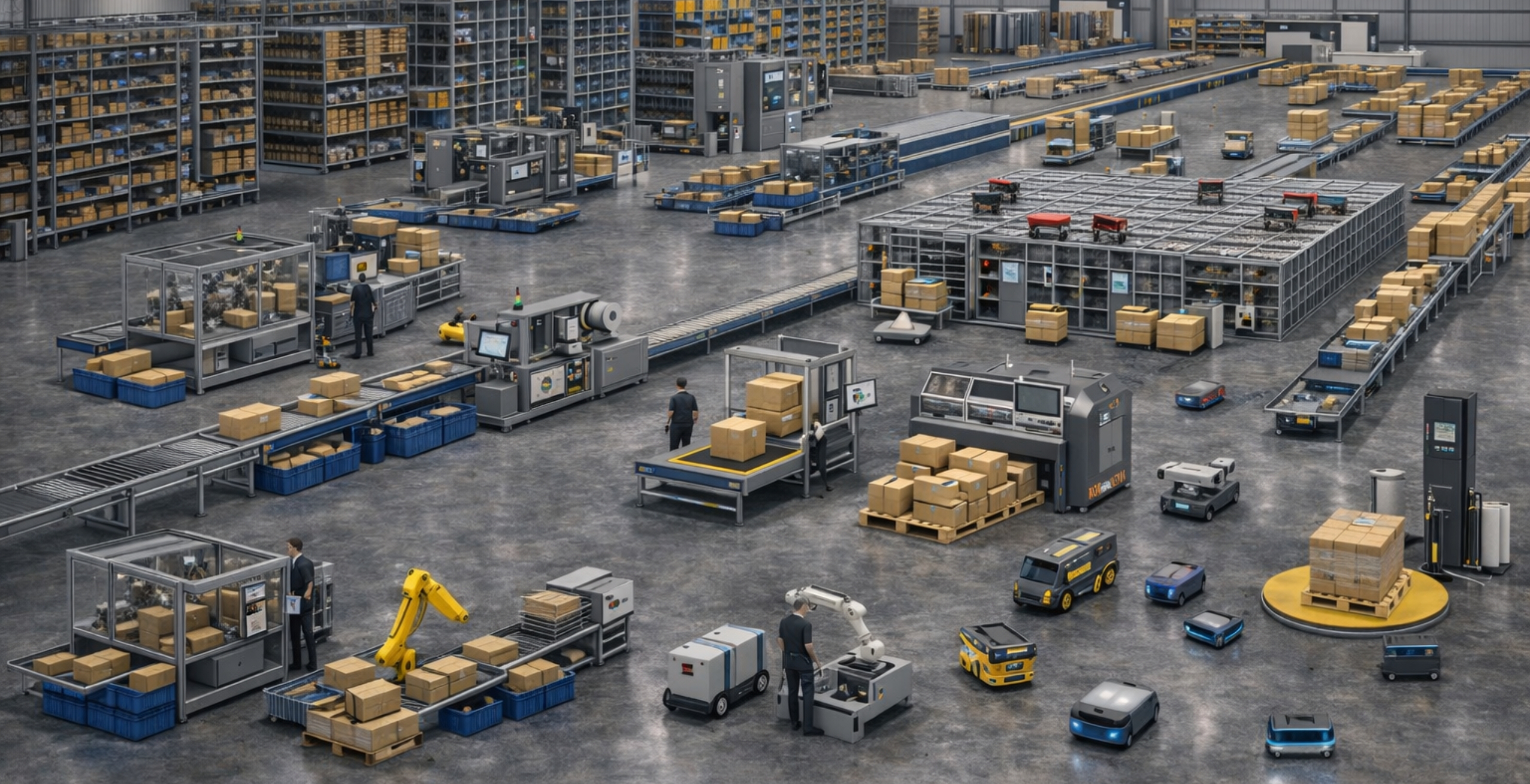
Warehouse automation technologies transform operations by integrating robotics, software, and advanced systems. From automated storage and retrieval to mobile robots and sortation systems, these solutions reduce manual labour, improve accuracy, and increase productivity. Stay ahead with innovative automation for a smarter, more efficient warehouse.
Why is it important to pick the right Warehouse Automation Technologies
Warehouse automation is reshaping supply chain operations, driven by rapid technological advancements and rising consumer expectations. Modern warehouses face increasing pressure to process orders faster, minimise errors, and optimise space. Automation solutions, from robotics to intelligent software, enable warehouses to meet these demands efficiently. Automated Storage and Retrieval Systems (AS/RS) optimise high-density storage, while Autonomous Mobile Robots (AMRs) and Automated Guided Vehicles (AGVs) handle material movement with precision. Sortation systems…
Warehouse automation is reshaping supply chain operations, driven by rapid technological advancements and rising consumer expectations. Modern warehouses face increasing pressure to process orders faster, minimise errors, and optimise space. Automation solutions, from robotics to intelligent software, enable warehouses to meet these demands efficiently. Automated Storage and Retrieval Systems (AS/RS) optimise high-density storage, while Autonomous Mobile Robots (AMRs) and Automated Guided Vehicles (AGVs) handle material movement with precision.
Sortation systems and robotic arms accelerate order processing, and end-of-line automation ensures consistent packaging. Software platforms integrate these technologies, providing real-time visibility and control. Embracing automation reduces labour dependency, enhances accuracy, and scales operations to meet peak demand. However, implementation requires investment and careful planning. As automation evolves, warehouses adopting these innovations gain a competitive edge in speed, cost-efficiency and customer satisfaction.
What are the Four Types of Warehouse Automation?
Warehouse automation is often defined as complete warehouse solutions centred on an ASRS system, but it can also be viewed as automating a range of processes within the warehouse operation. Understanding the different levels of automation helps businesses identify the right starting point for their needs and budget.
Basic Automation – At the entry level, basic automation introduces tools like conveyor systems and barcode scanners that replace the most repetitive manual tasks. These solutions reduce physical strain on workers and speed up simple operations like sorting and tracking. While they’re relatively affordable and easy to implement, basic automation offers limited scalability, once you’ve automated the basics, you’ll need to look elsewhere for further gains.
System Automation – Software-driven automation represents the next step up, with Warehouse Management Systems (WMS) coordinating operations across the facility. A good WMS improves visibility throughout your supply chain, ensures accurate inventory counts, and helps coordinate staff and equipment more effectively. The main challenge lies in integration, you’ll need to ensure your new system communicates properly with existing software and workflows.
Mechanised Automation – Introducing robotics into material handling marks a significant leap in capability. Automated Guided Vehicles (AGVs) and Autonomous Mobile Robots (AMRs) move goods around the warehouse without human intervention, dramatically reducing labour costs whilst improving speed and consistency. However, this level of automation demands substantial upfront investment and careful planning to maximise return.
Advanced Automation – A fully integrated automated warehouse represents the pinnacle of efficiency, with minimal manual intervention and optimised storage density and throughput. These systems adapt to demand fluctuations and can scale with your business growth. The trade-off comes in complexity; implementation requires significant expertise, and the system demands ongoing maintenance and technical support to maintain peak performance.
An automated solution to meet demands of business expansion
Our client had three diverse brands, each distributing to wholesale, ecommerce and retail stores. We provided a solution that didn’t change for the operator, whoever they were picking and packing for.
Take a look to see how we did it.
Warehouse Automation Technologies
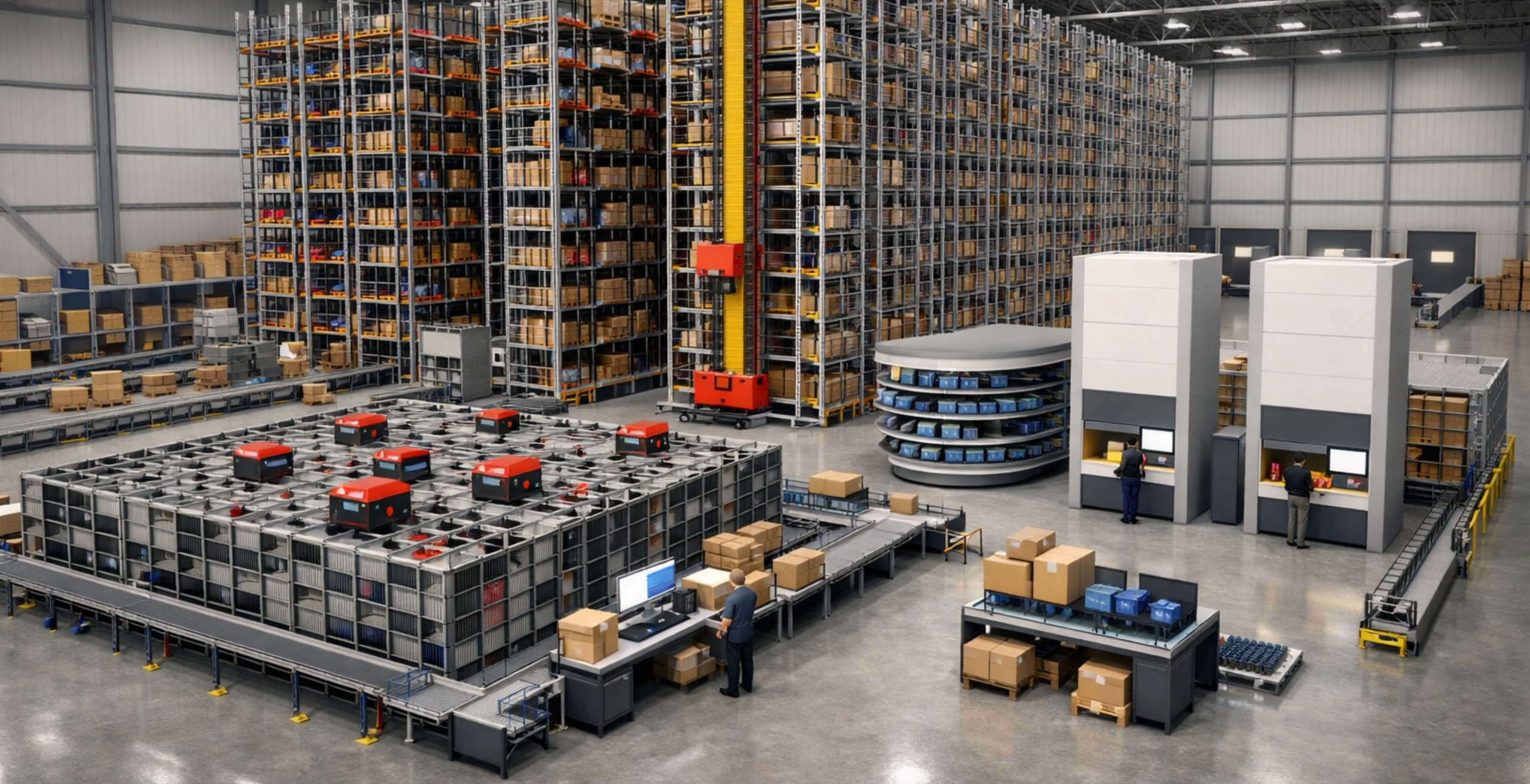
AS/RS (Automated Storage and Retrieval Systems)
Automated Storage and Retrieval Systems (AS/RS) are advanced solutions that precisely and quickly store and retrieve goods. They use cranes, shuttles, and AMRs to handle pallets, totes, and cartons in dense storage environments. These systems operate within controlled aisles, automatically moving items to and from designated locations, reducing manual intervention and optimising space utilisation. AS/RS systems are critical for warehouses that manage high volumes of inventory or operate in limited…
Automated Storage and Retrieval Systems (AS/RS) are advanced solutions that precisely and quickly store and retrieve goods. They use cranes, shuttles, and AMRs to handle pallets, totes, and cartons in dense storage environments. These systems operate within controlled aisles, automatically moving items to and from designated locations, reducing manual intervention and optimising space utilisation.
AS/RS systems are critical for warehouses that manage high volumes of inventory or operate in limited space. They improve accuracy, reduce labour costs, and enable faster order fulfilment, making them essential for modern, high-performance supply chains.
Key Benefits:
Space Efficiency: Dense storage maximises vertical space.
Speed: Rapid movement of goods accelerates throughput.
Safety: Reduces manual handling and associated risks.
Examples of Process Improvements:
Cranes, shuttles or AMRs move pallets, totes or cartons seamlessly between storage and picking zones.
High-bay AS/RS systems allow thousands of pallets to be stored in compact footprints and utilise the full height of the building.
Integration with Warehouse Management Systems ensures real-time inventory visibility and optimised workflows.
×
Warehouse Automation Technologies
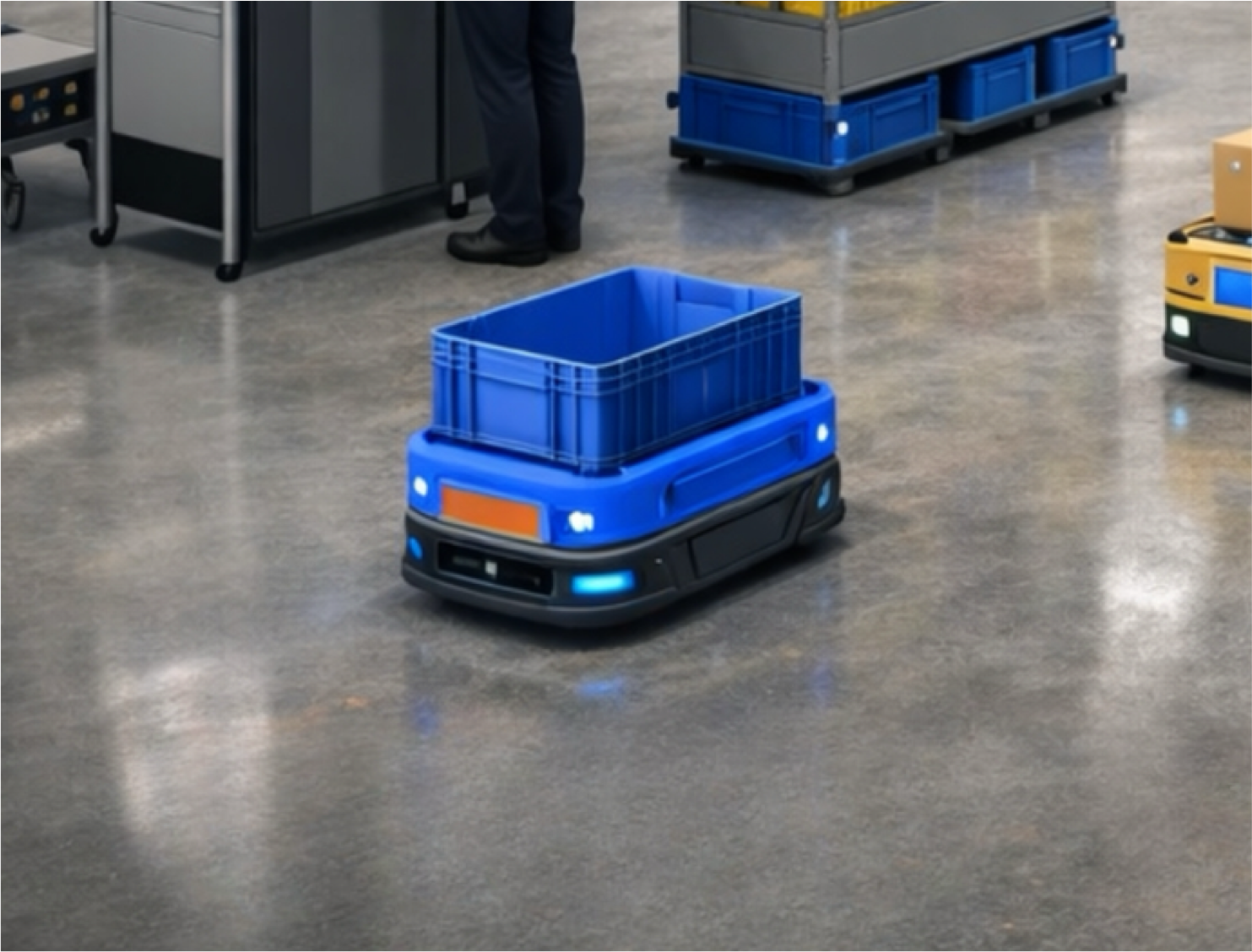
AMR (Autonomous Mobile Robots)
Autonomous Mobile Robots (AMRs) are intelligent, self-navigating machines designed to transport goods within a warehouse without fixed paths or human intervention. Using advanced sensors, cameras, and mapping technology, AMRs adapt to dynamic environments, avoiding obstacles and optimising routes in real time. Unlike traditional automated systems, AMRs offer flexibility and scalability, making them ideal for warehouses with changing layouts or seasonal demand. AMRs enhance operational efficiency by reducing manual handling and…
Autonomous Mobile Robots (AMRs) are intelligent, self-navigating machines designed to transport goods within a warehouse without fixed paths or human intervention. Using advanced sensors, cameras, and mapping technology, AMRs adapt to dynamic environments, avoiding obstacles and optimising routes in real time. Unlike traditional automated systems, AMRs offer flexibility and scalability, making them ideal for warehouses with changing layouts or seasonal demand.
AMRs enhance operational efficiency by reducing manual handling and improving safety. They are particularly valuable for e-commerce and high-volume fulfilment centres where speed and accuracy are critical.
Key Benefits:
Flexibility: Easily reprogrammed for new tasks or layouts.
AMRs transport pallets, totes, and cartons between storage and picking zones.
Integration with Warehouse Management Systems enables real-time task allocation.
Ideal for “goods-to-person” picking, reducing walking time for staff.
×
Warehouse Automation Technologies
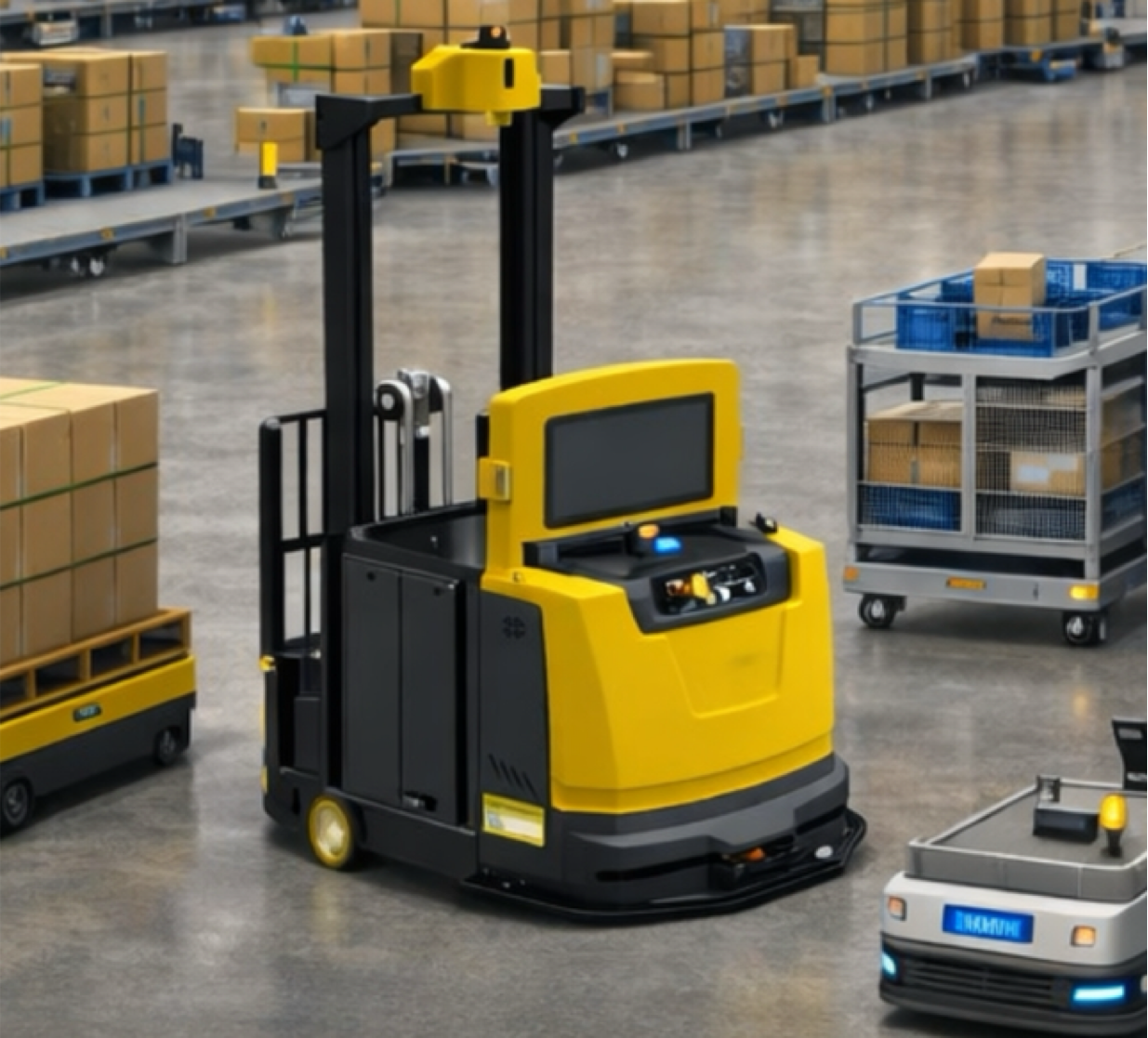
AGV (Automated Guided Vehicles)
Automated Guided Vehicles (AGVs) are driverless transport systems that move goods along fixed paths using magnetic strips, wires, or sensors. They are widely used for repetitive material handling tasks, such as moving pallets from receiving to storage or delivering goods to production lines. AGVs operate reliably in structured environments, making them a cost-effective solution for warehouses seeking automation without major infrastructure changes. AGVs improve safety, reduce labour costs, and ensure…
Automated Guided Vehicles (AGVs) are driverless transport systems that move goods along fixed paths using magnetic strips, wires, or sensors. They are widely used for repetitive material handling tasks, such as moving pallets from receiving to storage or delivering goods to production lines. AGVs operate reliably in structured environments, making them a cost-effective solution for warehouses seeking automation without major infrastructure changes.
AGVs improve safety, reduce labour costs, and ensure consistent material flow. They are ideal for facilities with predictable workflows and high-volume pallet movement.
Key Benefits:
Reliability: Perfect for repetitive, high-volume tasks.
Safety: Reduces accidents and manual handling risks.
Cost-Efficiency: Lower operational costs over time.
Integration: Works with existing warehouse systems.
Examples of Process Improvements:
AGVs transport pallets between inbound docks and storage zones.
Used for feeding production lines with raw materials.
Supports “lights-out” operations for 24/7 efficiency.
×
Warehouse Automation Technologies
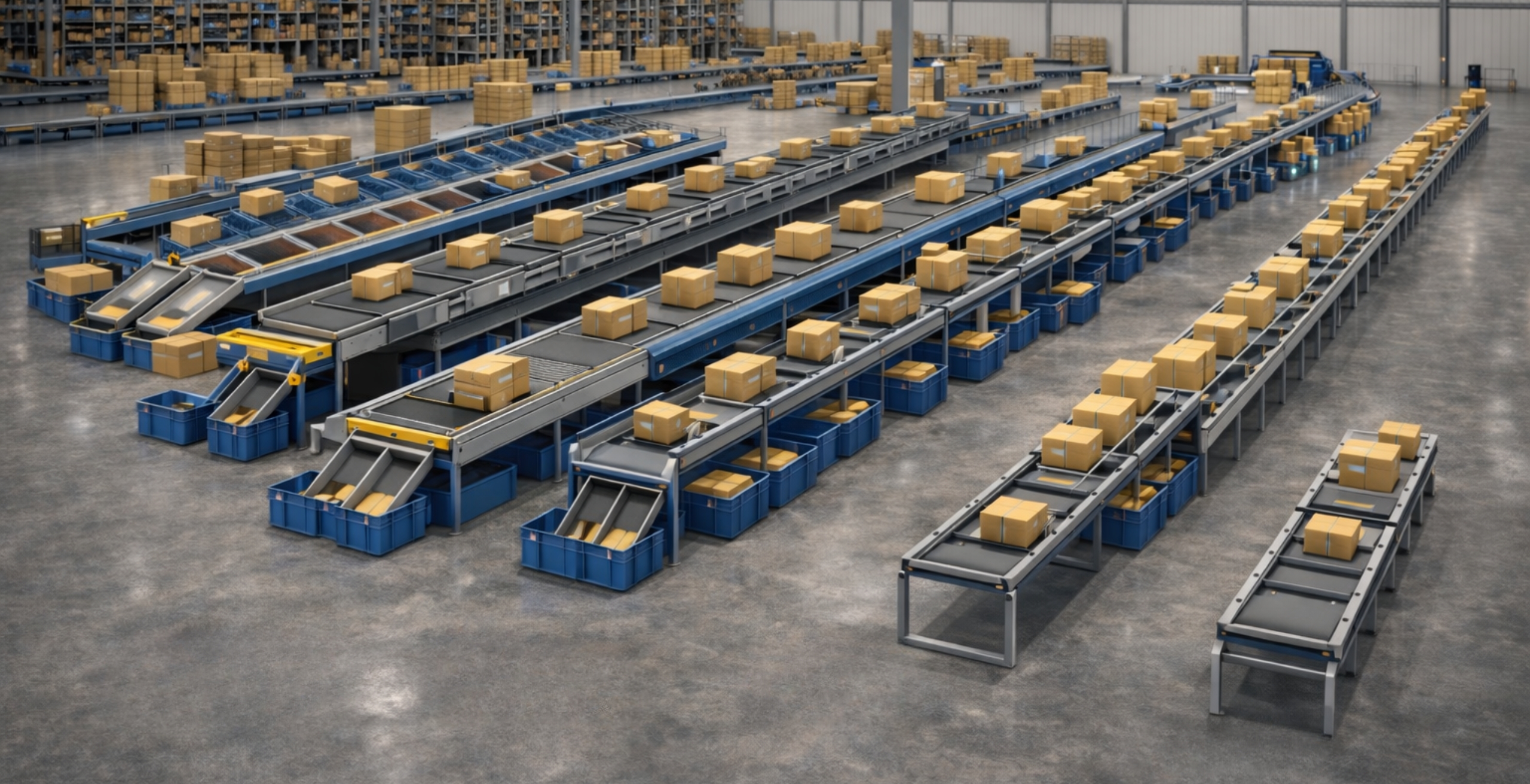
Sortation System
Sortation systems automate the process of organising items for dispatch, using conveyors, sensors, and scanning technology to direct products to the correct destination. These systems are essential for high-speed order fulfilment in e-commerce and retail distribution centres, where accuracy and speed are critical. Sortation systems reduce manual sorting errors, accelerate throughput, and optimise shipping processes, ensuring timely delivery and improved customer satisfaction. Key Benefits: Speed: Handles thousands of items per…
Sortation systems automate the process of organising items for dispatch, using conveyors, sensors, and scanning technology to direct products to the correct destination. These systems are essential for high-speed order fulfilment in e-commerce and retail distribution centres, where accuracy and speed are critical.
Sortation systems reduce manual sorting errors, accelerate throughput, and optimise shipping processes, ensuring timely delivery and improved customer satisfaction.
Key Benefits:
Speed: Handles thousands of items per hour.
Accuracy: Minimises mis-sorts and shipping errors.
Efficiency: Streamlines order consolidation.
Scalability: Adapts to growing order volumes.
Examples of Process Improvements:
Tilt-tray and cross-belt sorters direct parcels to the correct lanes.
Integration with scanning systems ensures accurate labelling.
Ideal for multi-channel fulfilment operations.
×
Warehouse Automation Technologies
Robot Arms
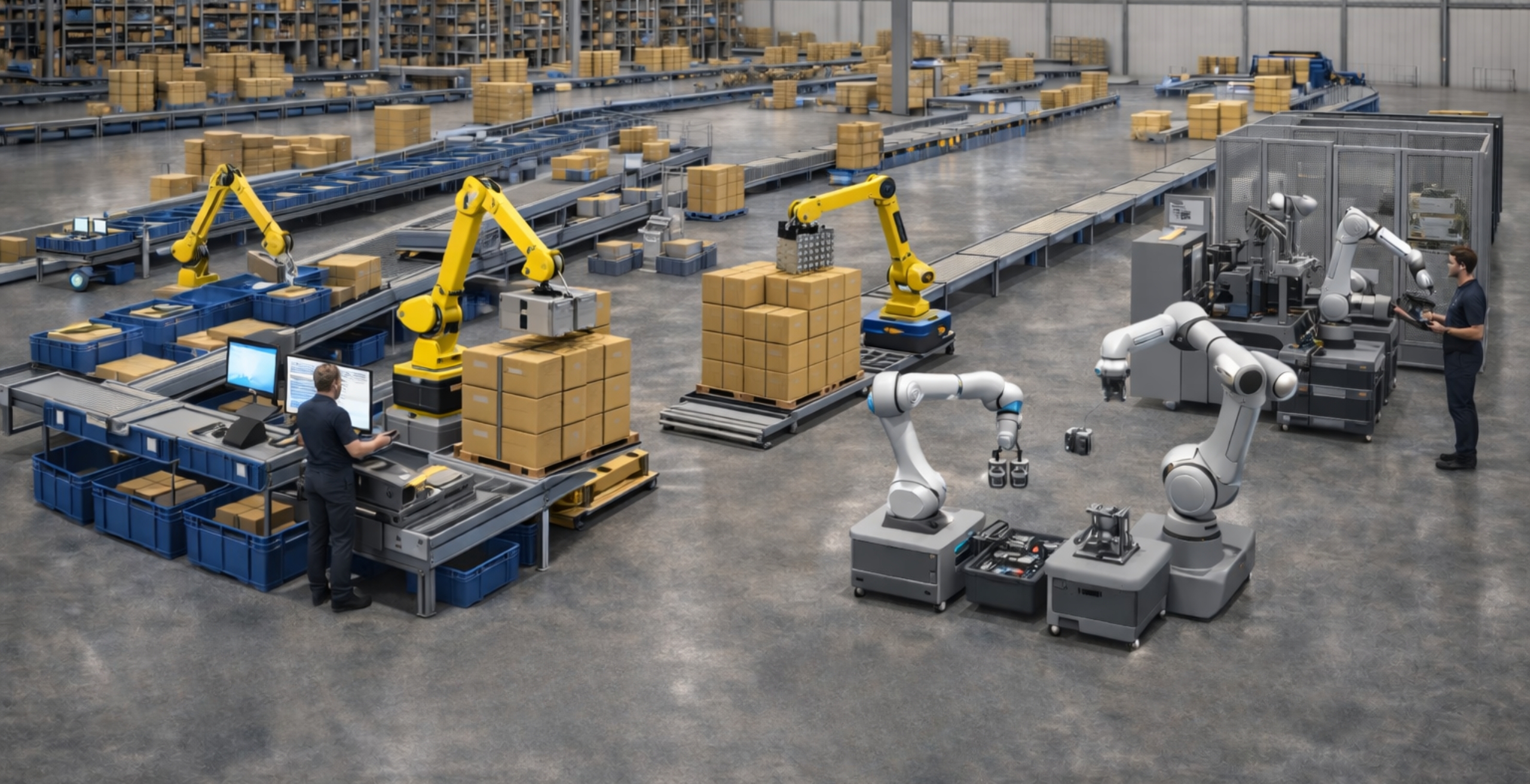
Robotic arms automate tasks such as palletising, depalletising, and trailer loading/unloading. Equipped with advanced gripping technology and vision systems, they handle heavy or awkward loads with precision and speed. These systems are commonly used in warehouses and distribution centres to reduce manual labour and improve safety. Robot arms increase productivity, reduce injury risks, and ensure consistent handling of goods, making them vital for high-volume operations. Key Benefits: Precision: Accurate placement…
Robotic arms automate tasks such as palletising, depalletising, and trailer loading/unloading. Equipped with advanced gripping technology and vision systems, they handle heavy or awkward loads with precision and speed. These systems are commonly used in warehouses and distribution centres to reduce manual labour and improve safety.
Robot arms increase productivity, reduce injury risks, and ensure consistent handling of goods, making them vital for high-volume operations.
Key Benefits:
Precision: Accurate placement and handling.
Safety: Eliminates manual lifting of heavy loads.
Speed: Accelerates pallet building and breakdown.
Consistency: Maintains quality across shifts.
Examples of Process Improvements:
Automated palletisers stack goods efficiently for shipping.
Depalletising robots unload trailers quickly and safely.
Integration with conveyors and sortation systems for seamless workflows.
×
Warehouse Automation Technologies
Packing Automation
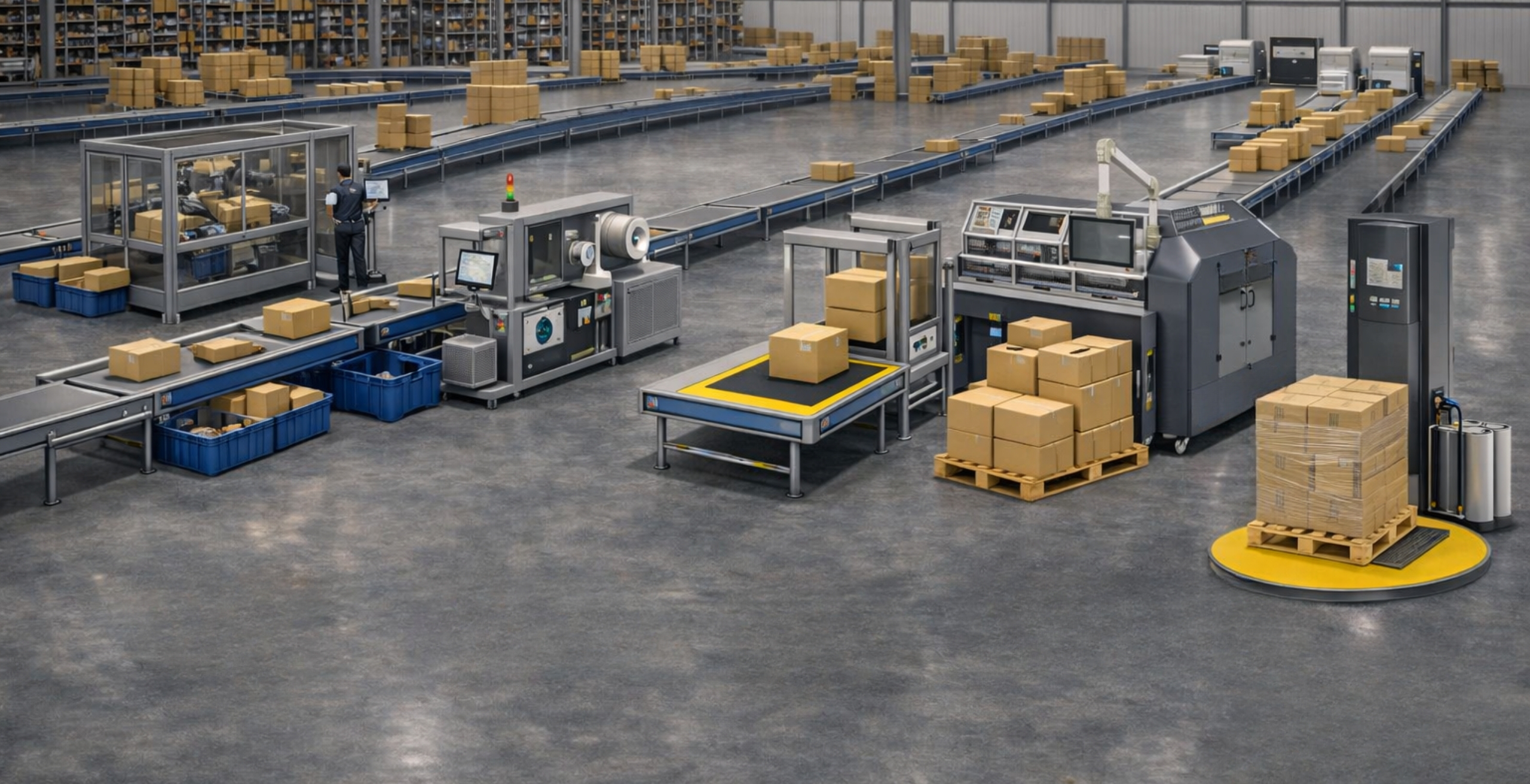
Packing automation refers to systems that streamline packaging processes, including carton erection, sealing, labelling, and pallet wrapping. These solutions use automated machinery to handle repetitive tasks, ensuring consistency and speed in high-volume operations. By reducing manual intervention, packing automation minimises errors and accelerates throughput, making it essential for warehouses and fulfilment centres managing large order volumes. Packing automation improves efficiency, reduces labour costs, and ensures uniform packaging quality. It also…
Packing automation refers to systems that streamline packaging processes, including carton erection, sealing, labelling, and pallet wrapping. These solutions use automated machinery to handle repetitive tasks, ensuring consistency and speed in high-volume operations. By reducing manual intervention, packing automation minimises errors and accelerates throughput, making it essential for warehouses and fulfilment centres managing large order volumes.
Packing automation improves efficiency, reduces labour costs, and ensures uniform packaging quality. It also supports sustainability by optimising material usage and reducing waste.
Key Benefits:
Speed: Handles thousands of packages per hour.
Consistency: Uniform sealing and labelling across all orders.
Cost Savings: Lower labour requirements and material waste.
Integration: Works seamlessly with upstream automation systems.
Examples of Process Improvements:
Automated carton sealers and stretch wrappers reduce manual packing time.
Labelling systems ensure accurate shipping information.
Integration with sortation and WMS enables real-time tracking and error-free dispatch.
×
Warehouse Automation Technologies
Hanging and Pouch/Pocket systems
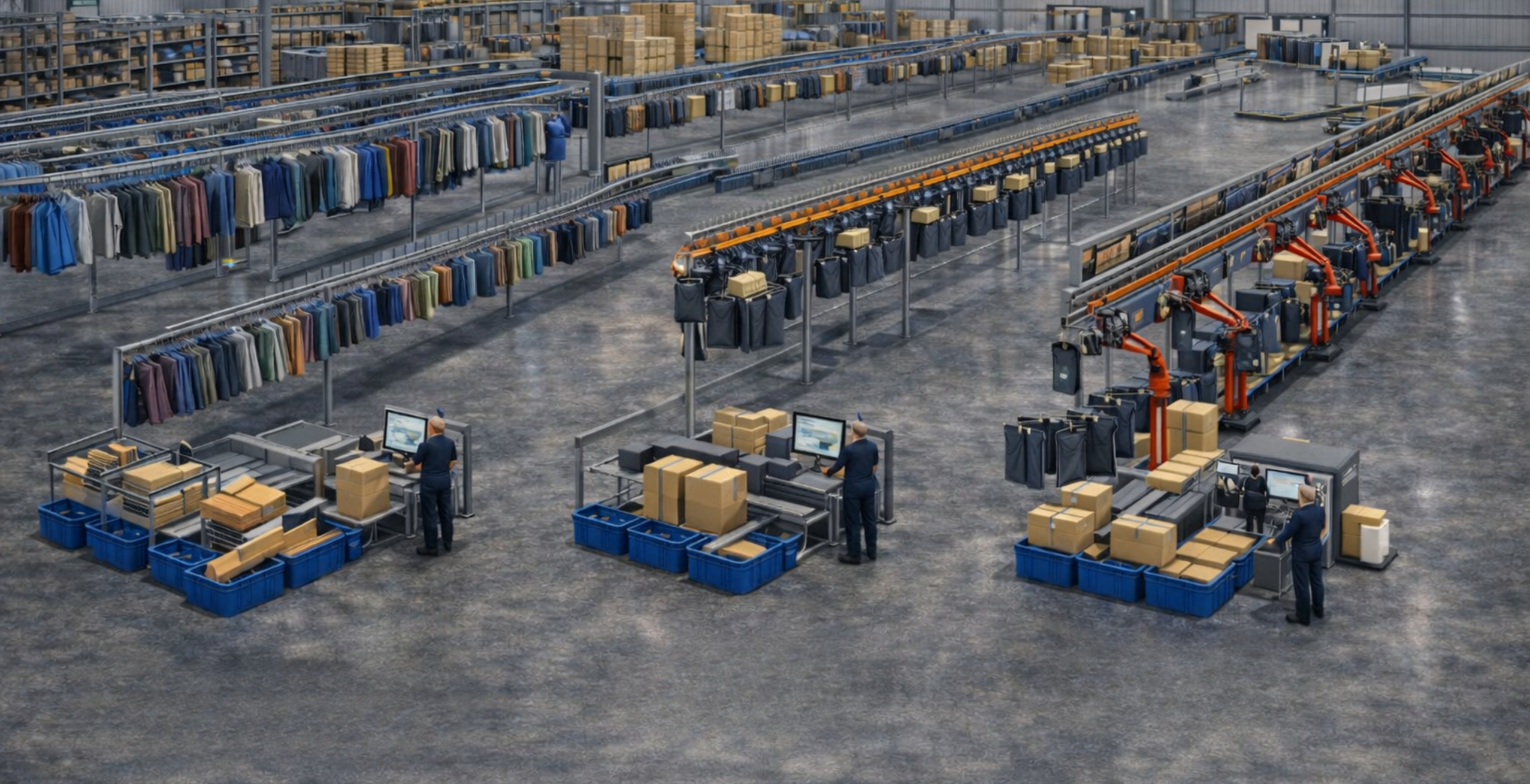
Hanging and pouch/pocket systems are specialised automation solutions designed for handling garments and small items in high-volume fulfilment environments. These systems use overhead conveyors and suspended pockets to transport products efficiently through storage, sorting, and packing processes. By utilising vertical space, they maximise warehouse capacity and streamline operations for sectors such as fashion, retail, and e-commerce. With growing demand for fast, accurate order fulfilment, hanging and pouch systems enable warehouses…
Hanging and pouch/pocket systems are specialised automation solutions designed for handling garments and small items in high-volume fulfilment environments. These systems use overhead conveyors and suspended pockets to transport products efficiently through storage, sorting, and packing processes. By utilising vertical space, they maximise warehouse capacity and streamline operations for sectors such as fashion, retail, and e-commerce.
With growing demand for fast, accurate order fulfilment, hanging and pouch systems enable warehouses to manage diverse product types without compromising speed or organisation. They are particularly valuable for operations dealing with mixed SKUs and high order variability.
Key Benefits:
Space Optimisation: Uses overhead space to free up floor area.
Efficiency: Speeds up picking and sorting for multi-item orders.
Flexibility: Handles garments, accessories, and small parcels.
Accuracy: Reduces errors in order consolidation.
Examples of Process Improvements:
Hanging garment conveyors streamline storage and retrieval for apparel.
Pouch systems sort and sequence items for efficient packing.
Integration with WMS ensures real-time tracking and automated order assembly.
×
Warehouse Automation Technologies
Software
Warehouse automation software acts as the central nervous system for modern operations. It includes Warehouse Management Systems (WMS), Warehouse Control Systems (WCS), and orchestration platforms that integrate hardware, robotics, and data flows. These systems provide real-time visibility, optimise workflows, and enable predictive analytics for better decision-making. Software ensures all automation technologies work together seamlessly, reducing downtime and improving efficiency. It also enables scalability and adaptability in fast-changing environments. Key Benefits:…
Warehouse automation software acts as the central nervous system for modern operations. It includes Warehouse Management Systems (WMS), Warehouse Control Systems (WCS), and orchestration platforms that integrate hardware, robotics, and data flows. These systems provide real-time visibility, optimise workflows, and enable predictive analytics for better decision-making.
Software ensures all automation technologies work together seamlessly, reducing downtime and improving efficiency. It also enables scalability and adaptability in fast-changing environments.
Key Benefits:
Visibility: Real-time inventory and order tracking.
Optimisation: Intelligent task allocation and route planning.
Integration: Connects AS/RS, AMRs, AGVs, and sortation systems.
Analytics: Predictive insights for demand planning and maintenance.
Examples of Process Improvements:
WMS automates inventory control and replenishment.
WCS synchronises conveyors, sorters, and robotic systems.
Cloud-based platforms enable remote monitoring and rapid scalability.
×
“Hatmill always took the time to engage with key stakeholders, understanding the business needs before designing their solutions, their ability to keep the project on track and the team focused enabled us to complete the complex transition from two warehouses to a single new site ahead of schedule.”
– Paul Roughley, Group Operations Director, CMS
FAQs
What should you know?
Why do I need help selecting a warehouse automation system?
Selecting a warehouse automation system can be complex due to the variety of technologies and vendors available. Our experts will help to ensure you choose the right system tailored to your specific operational needs and goals. Our consultants will provide insights into the latest advancements, perform cost-benefit analyses, and ensure seamless integration with existing processes to avoid costly mistakes and maximise your ROI.
What are the differences between AMRs and ASRS?
Autonomous Mobile Robots (AMRs) are self-navigating robots used for transporting products within dynamic environments such as warehouses and manufacturing facilities. They adapt to changes, optimise material flow, and reduce labour costs. In contrast, Automated Storage and Retrieval Systems (ASRS) are fixed systems designed for high-density storage environments. They automate the storage and retrieval process, maximising space utilisation and ensuring precise handling of items. AMRs offer flexibility and scalability, while ASRS provides efficient, high-density storage solutions.
What are the benefits of warehouse automation systems?
Warehouse automation systems offer numerous benefits, including increased efficiency and productivity by automating repetitive tasks. They enhance accuracy and reduce human error in inventory management and order fulfilment. These systems optimise space utilisation and improve storage density, leading to cost savings.
Automation also enables real-time inventory tracking and better data analytics, supporting informed decision-making. Additionally, they enhance workplace safety by reducing manual handling of heavy items and creating a more streamlined workflow.
Case studies
Our work
Our homewares client was growing at 5% CPGR, and was hitting capacity constraints at each peak period. They needed a long term automation solution to support their growth, reduce headcount and also improve the warehousing cost to serve, which is exactly what we delivered.